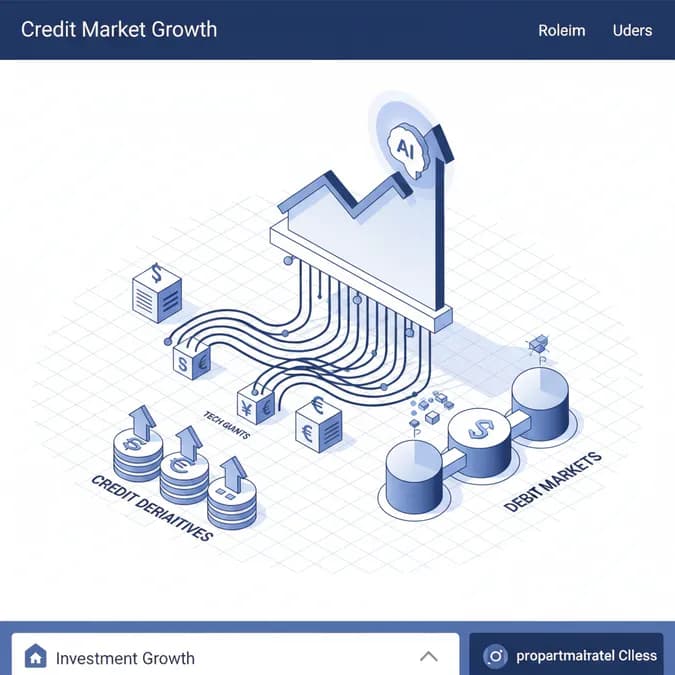
In recent months, the financial landscape has been significantly influenced by the rapid advancements in artificial intelligence (AI). The AI bubble has raised concerns among debt investors, who are increasingly worried that major tech companies are borrowing excessively in their race to develop cutting-edge AI technologies. This trend has led to the emergence of credit derivatives linked to individual high-grade Big Tech companies, which have quickly become some of the most actively traded instruments in the U.S. market.
Current Market Trends
The competition among tech giants to dominate the AI sector has intensified, prompting significant borrowing to fund research and development. Companies are leveraging their financial resources to secure a competitive edge, leading to concerns among debt investors about the sustainability of such borrowing practices. As highlighted by Bloomberg, this aggressive financial strategy raises questions about the long-term viability of these companies if the anticipated returns on their AI investments do not materialize.
Impact of AI on Debt Markets
The influx of capital into AI initiatives has created a ripple effect in the debt markets. Investors are increasingly cautious, as the potential for an AI bubble looms large. The fear is that if these tech firms continue to borrow without a clear path to profitability, it could lead to significant financial instability. This sentiment is echoed across various financial platforms, where analysts are closely monitoring the borrowing patterns of these companies.
Emergence of Credit Derivatives
In response to these market dynamics, credit derivatives tied to individual high-grade Big Tech companies have emerged as a new financial instrument. These derivatives, which did not exist for many of these companies just a year ago, are now among the most actively traded in the U.S. market. This shift indicates a growing recognition of the risks associated with the excessive borrowing of these firms. Investors are using these derivatives as a hedge against potential defaults, reflecting a more cautious approach to investing in the tech sector.
Expert Insights
According to a financial services analyst, "The AI bubble is not just a buzzword; it representa significant shift in how tech companies approach funding. The derivatives market is adapting to these changes, providing tools for investors to manage the associated risks." This perspective highlights the evolving nature of financial instruments in response to emerging market trends. Furthermore, a financial services analyst, an economist at Harvard University, states, "The implications of the AI bubble on debt markets are profound, as they challenge traditional investment paradigms and risk assessments."
FAQ
What is the AI bubble?
The AI bubble refers to the speculative investment surge in artificial intelligence technologies, leading to concerns about overvaluation and excessive borrowing by tech companies.
How are credit derivatives related to the AI bubble?
Credit derivatives are financial instruments that allow investors to hedge against the risk of default by companies heavily investing in AI, reflecting the growing concerns about the sustainability of their borrowing practices.
What are the risks associated with the AI bubble?
The primary risks include potential financial instability if tech firms fail to achieve profitability from their AI investments, leading to widespread defaults and market volatility.
Conclusion
The rapid evolution of AI technology is reshaping the financial landscape, particularly in the debt markets. As major tech companies continue to borrow heavily in pursuit of AI advancements, the emergence of credit derivatives signifies a response to the growing concerns among investors. While these financial products may offer some protection against potential risks, the overall impact of this borrowing spree on the stability of the tech sector remains to be seen. Investors must remain vigilant as they navigate this complex and evolving market.
Key Takeaways
- The AI bubble is significantly impacting debt markets, with tech companies borrowing heavily.
- Credit derivatives are emerging as a response to the risks associated with this borrowing.
- Experts warn of potential financial instability if profitability from AI investments is not achieved.
- Investors are adapting their strategies to manage risks in this evolving landscape.