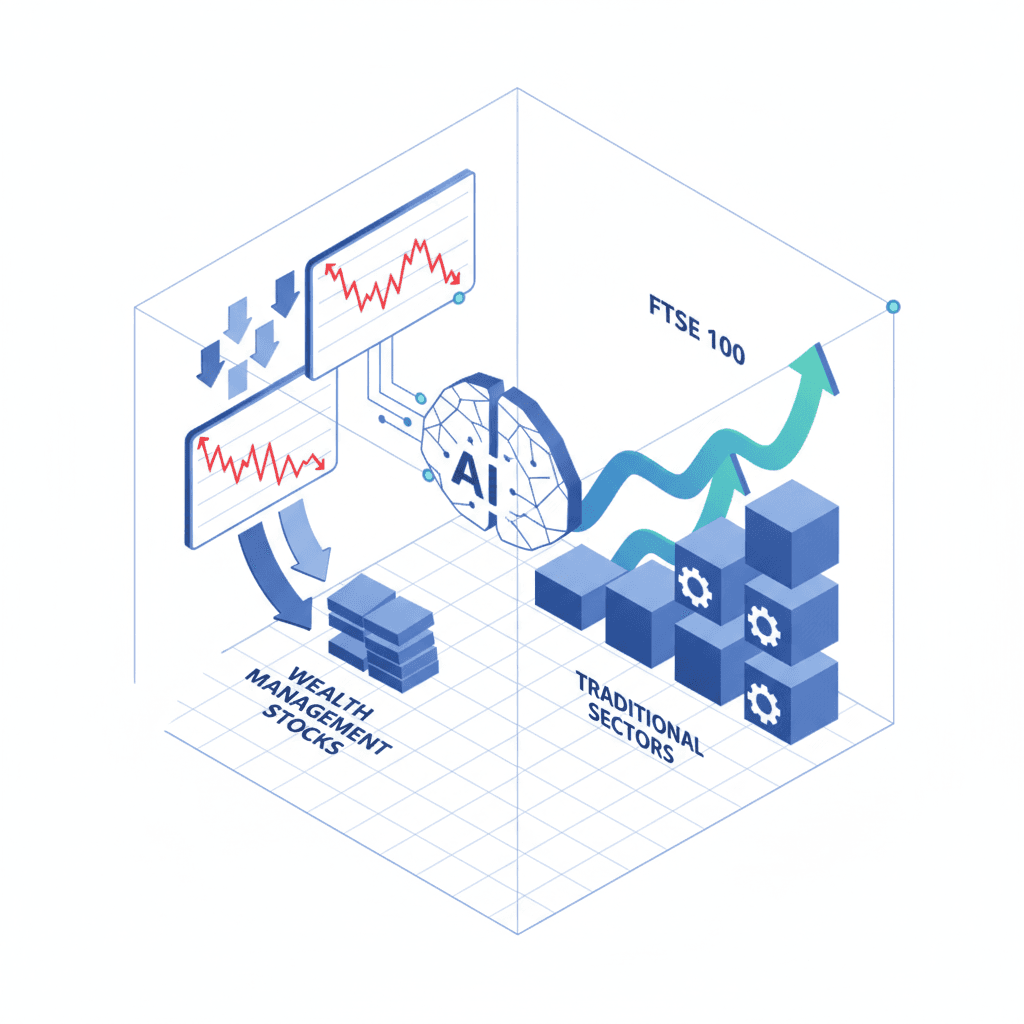
The financial services landscape is experiencing a significant shift as artificial intelligence disruption fears create divergent market movements across different sectors. While the FTSE 100 index approaches record territory, wealth management firms face mounting pressure from investors concerned about AI's transformative impact on the industry.
The Market Divide and AI Disruption
The current market environment reveals a stark contrast between traditional and technology-vulnerable sectors. Mining companies, oil stocks, and traditional banking institutions are propelling the FTSE 100 toward new highs, demonstrating continued investor confidence in these established industries. Meanwhile, wealth managers have become the latest casualties in a broader technology-driven selloff affecting financial services.
This divergence highlights growing investor anxiety about which financial sectors will successfully navigate the AI revolution and which may face significant disruption to their business models.
Understanding AI Disruption in Wealth Management
Wealth management firms are particularly vulnerable to AI disruption due to several factors. Automated investment platforms, known as robo-advisors, have already begun capturing market share by offering low-cost portfolio management services. These platforms utilize sophisticated algorithms to provide personalized investment recommendations at a fraction of traditional advisory fees.
The technology threatens to commoditize services that wealth managers have historically charged premium fees for, including portfolio rebalancing, tax-loss harvesting, and basic financial planning. As AI capabilities advance, even more complex advisory services may become automated, further pressuring traditional business models.
Traditional Sectors Show Resilience
In contrast, mining and oil stocks continue attracting investment despite broader technology concerns. These commodity-focused industries benefit from tangible assets and established market positions that appear less susceptible to immediate AI disruption. Banks, while not immune to technology transformation, have demonstrated greater adaptability through significant technology investments and diversified revenue streams.
The banking sector's relative strength suggests investors believe large financial institutions possess the resources and scale necessary to integrate AI technologies rather than be displaced by them. Major banks are actively developing their own AI-powered services, from fraud detection to customer service chatbots, positioning themselves as technology adopters rather than victims.
Investor Implications and Strategy
For investors navigating this evolving landscape, understanding AI disruption becomes crucial for portfolio positioning. The current market dynamics suggest several considerations:
- Diversification across financial services subsectors may help mitigate sector-specific risks. While wealth managers face headwinds, other financial services segments may offer better near-term prospects.
- Traditional value sectors like mining and energy continue providing portfolio stability, though long-term sustainability concerns remain relevant for oil stocks.
- Established banks with strong technology investment track records may offer a balanced approach, combining traditional financial services stability with innovation potential.
The Broader Technology Selloff Context
Wealth managers join a growing list of sectors experiencing investor skepticism about their AI-era viability. Professional services, certain retail segments, and traditional media have all faced similar pressures as markets reassess which business models remain sustainable amid rapid technological advancement.
This pattern reflects a broader market recalibration as investors attempt to identify winners and losers in an AI-transformed economy. The volatility creates both risks and opportunities for astute investors willing to conduct thorough fundamental analysis.
Looking Ahead
The financial services industry stands at a crossroads. While AI disruption concerns are creating near-term market volatility, the long-term outcome remains uncertain. Some wealth managers may successfully adapt by emphasizing high-touch services, complex planning, and relationship management that AI cannot easily replicate. Others may struggle to justify their fee structures in an increasingly automated world.
Investors should monitor how financial services firms respond to these challenges, watching for strategic pivots, technology partnerships, and business model innovations that could determine which companies thrive in the AI era and which become cautionary tales of disruption.