Ultimate Guide to 30-Year Mortgage Rates: What the 6.09% Drop Means for You
Content Team
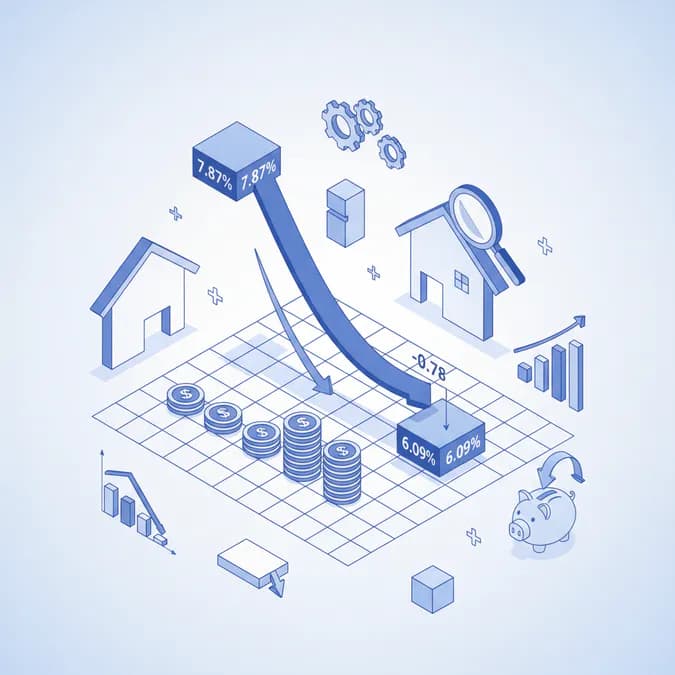
Freddie Mac reports 30-year mortgage rates have fallen to 6.09%, marking a 78 basis point decline and 3-year lows. Discover how this impacts your monthly payments, refinancing decisions, and homebuying power in our comprehensive guide.
Freddie Mac reports that 30-year mortgage rates have fallen to 6.09%, marking a significant 78 basis point decline year-over-year and hitting 3-year lows. This substantial drop in 30-year mortgage rates represents one of the most meaningful shifts in the lending landscape in recent years, bringing welcome relief to prospective homebuyers and existing homeowners considering refinancing. Understanding how these mortgage rates affect your financial situation is essential for making informed decisions about homeownership and debt management.
The decline in 30-year mortgage rates signals a meaningful change in the mortgage market landscape. For context, a 78 basis point drop is substantial enough to materially affect borrowing costs across the entire housing market, influencing both purchase decisions and refinancing activity. This shift comes as welcome news to prospective homebuyers who have faced affordability challenges in the higher rate environment of recent years.
The shift in 30-year mortgage rates comes as welcome news to prospective homebuyers who have faced affordability challenges in the higher rate environment of recent years. This steep decline signals a meaningful change in the mortgage market landscape. For context, a 78 basis point drop is substantial enough to materially affect borrowing costs across the entire housing market, influencing both purchase decisions and refinancing activity.
What Basis Points Mean for Your 30-Year Mortgage Rates
Understanding basis points is essential for evaluating changes in 30-year mortgage rates. One basis point equals 0.01%, so a 78 basis point decline translates to a 0.78% decrease in the mortgage rate. While this may seem like a small percentage, the compounding effect over a 30-year loan term creates substantial financial differences.
To illustrate the impact of 30-year mortgage rates, consider these scenarios:
A $300,000 mortgage at 6.87% (last year's rate) versus 6.09% (current rate) results in meaningful monthly payment reductions
The total interest paid over 30 years decreases significantly with even modest rate reductions
Lower 30-year mortgage rates improve purchasing power, allowing buyers to qualify for larger loan amounts with the same monthly payment
The difference compounds significantly over the life of the loan, potentially saving tens of thousands of dollars
The Real Impact on Monthly Payments: How 30-Year Mortgage Rates Affect Your Budget
The practical implications of lower 30-year mortgage rates extend far beyond abstract percentage changes. On a typical $300,000 mortgage, the difference between last year's rates and today's 6.09% rate translates to hundreds of dollars in monthly savings. This reduction makes homeownership accessible to buyers who were previously unable to qualify or afford properties in their desired markets.
For example, at a 6.87% rate on a $300,000 loan, the monthly principal and interest payment would be approximately $1,996. At the current 6.09% rate, that same loan would have a monthly payment of approximately $1,799. This $197 monthly difference translates to $2,364 in annual savings, or $70,920 over the 30-year life of the loan—not including the additional interest savings from the lower rate compounding over time.
The expanded affordability created by lower 30-year mortgage rates creates a ripple effect throughout the housing market. Buyers can now consider properties they previously couldn't afford, potentially upgrading from starter homes to properties with more space, better locations, or additional amenities. For existing homeowners, these lower rates present compelling refinancing opportunities that could reduce their long-term interest costs.
Why 30-Year Mortgage Rates Are Falling: Economic Factors at Play
Mortgage rates don't exist in isolation—they follow broader economic trends including Federal Reserve policy decisions, inflation data, employment reports, and bond market movements. The current decline in 30-year mortgage rates reflects shifting economic conditions and market expectations about future interest rate trajectories.
The Federal Reserve's monetary policy decisions have a significant impact on 30-year mortgage rates. When the Fed adjusts its benchmark interest rate, it influences the broader lending environment, which in turn affects 30-year mortgage rates offered by lenders. Additionally, inflation data plays a crucial role in rate movements. If inflation shows signs of cooling, the Fed may pause or reverse rate hikes, which typically leads to lower 30-year mortgage rates.
Employment reports and economic growth data also influence 30-year mortgage rates. Strong job markets and robust economic growth can push rates higher, while signs of economic slowdown may lead to lower rates as investors seek safer investments in bonds. The bond market itself is a critical driver of mortgage rates, as mortgage-backed securities are priced based on Treasury bond yields.
The achievement of 3-year lows in 30-year mortgage rates is particularly significant because it demonstrates a meaningful reversal from the aggressive rate-hiking environment that characterized the previous period. This milestone suggests the market may be moving toward greater stability, though future rate movements remain subject to economic developments.
What This Means for Homebuyers: Maximizing Opportunities with Current 30-Year Mortgage Rates
For prospective homebuyers, the current environment of lower 30-year mortgage rates opens a window of opportunity. Lower rates directly improve purchasing power and make monthly payments more manageable. Those who have been waiting for more favorable conditions should seriously evaluate their timeline and financial readiness.
With 30-year mortgage rates at 6.09%, buyers can afford more expensive properties with the same monthly payment compared to when rates were higher. This expanded purchasing power is particularly valuable in competitive markets where inventory is limited. Additionally, lower 30-year mortgage rates mean less of your monthly payment goes toward interest and more goes toward building equity in your home.
However, it's important to note that while 30-year mortgage rates have declined significantly, they remain higher than the historic lows seen in 2020-2021. Buyers should focus on finding properties that fit their needs and financial situation rather than attempting to time the perfect rate environment.
Refinancing Opportunities: How Existing Homeowners Can Benefit from Lower 30-Year Mortgage Rates
Existing homeowners should evaluate refinancing options, particularly those with mortgages originated at significantly higher rates. Even a modest rate reduction can generate substantial savings over the remaining loan term, though closing costs and fees must be weighed against potential benefits.
A refinance from a 7.5% rate to the current 6.09% rate would result in significant monthly savings. On a $300,000 loan with 25 years remaining, this rate reduction would lower monthly payments by approximately $180 and save over $54,000 in interest over the life of the loan.
When considering a refinance, homeowners should calculate their break-even point—the number of months it takes for monthly savings to exceed closing costs. If you plan to stay in your home beyond the break-even point, refinancing typically makes financial sense. Most experts recommend refinancing when rates drop by at least 0.5% to 1%, though individual circumstances vary.
Frequently Asked Questions About 30-Year Mortgage Rates
What is the current 30-year mortgage rate?
According to Freddie Mac, the current 30-year mortgage rate is 6.09%, representing a 78 basis point decline from the previous year and the lowest level in three years.
How do 30-year mortgage rates compare to 15-year rates?
30-year mortgage rates are typically higher than 15-year rates because lenders take on more risk over a longer period. Currently, while 30-year mortgage rates sit at 6.09%, 15-year rates are generally 0.3% to 0.5% lower. However, the monthly payment on a 15-year mortgage is higher because the loan is paid off in half the time.
Will 30-year mortgage rates continue to decline?
Predicting future 30-year mortgage rates is challenging and depends on numerous economic factors including Federal Reserve decisions, inflation trends, employment data, and global economic conditions. Financial experts recommend focusing on your personal financial situation rather than attempting to time the market.
How often do 30-year mortgage rates change?
30-year mortgage rates can change daily based on market conditions. Freddie Mac publishes weekly data on 30-year mortgage rates, but rates can fluctuate multiple times throughout each day based on economic news and market sentiment.
Should I lock in my 30-year mortgage rate now?
Whether to lock in your 30-year mortgage rate depends on your personal circumstances, timeline, and risk tolerance. If you're ready to purchase or refinance and rates align with your budget, locking in a rate protects you from future increases. Consulting with your mortgage lender can help you understand your options.
How do 30-year mortgage rates affect home prices?
Lower 30-year mortgage rates increase buyer purchasing power, which can put upward pressure on home prices as more buyers can afford higher prices. Conversely, higher rates reduce purchasing power and can put downward pressure on prices. The relationship between rates and prices is complex and varies by market.
Market Context: Understanding the Broader Picture of 30-Year Mortgage Rates
The current environment of 30-year mortgage rates at 6.09% represents a significant shift from the rate-hiking cycle that began in 2022. During that period, the Federal Reserve aggressively raised interest rates to combat inflation, which caused 30-year mortgage rates to climb to levels not seen in decades. At the peak, 30-year mortgage rates exceeded 7%, creating significant affordability challenges for homebuyers.
The recent decline in 30-year mortgage rates reflects the Fed's assessment that inflation is cooling and economic growth is moderating. This shift in monetary policy has allowed 30-year mortgage rates to decline substantially, bringing relief to the housing market.
Historically, 30-year mortgage rates have ranged from below 3% during the pandemic era to over 8% in previous decades. The current 6.09% rate is moderate by historical standards, though it remains elevated compared to the ultra-low rates of 2020-2021.
Timing Your Decision: When to Act on 30-Year Mortgage Rates
While predicting future rate movements remains challenging, the current 6.09% rate on 30-year mortgage rates represents a meaningful improvement from recent years. Rather than attempting to time the perfect market moment, financial advisors generally recommend acting when rates align with your financial situation and homeownership timeline.
For homebuyers, this means evaluating whether you're financially ready to purchase, have saved an adequate down payment, and have stable employment and income. If these factors are in place, the current environment of 30-year mortgage rates offers a reasonable opportunity to move forward.
For refinancers, the calculation is more straightforward. If your current rate is at least 0.5% to 1% higher than current 30-year mortgage rates, and you plan to stay in your home long enough to recoup closing costs, refinancing typically makes sense.
Consulting with mortgage lenders and financial advisors can help determine whether now is the right time to move forward with your homeownership or refinancing goals. These professionals can provide personalized analysis based on your specific financial situation and objectives.
Explore 10 essential insights on consumer credit trends for 2026, covering personal loans, mortgages, and their implications for borrowers and lenders.
Explore 10 essential insights into consumer credit trends for 2026, focusing on personal loans, mortgages, and key factors influencing borrowing decisions.